Dreamy Floral Seamless Patterns: Integrating Digital Assets into Creative Workflows
In the landscape of digital design, sourcing high-quality assets is often the first bottleneck in a creative workflow. Whether you are a freelancer preparing client deliverables, an educator designing classroom materials, or a small business owner creating packaging prototypes, the efficiency of your process depends heavily on the tools and resources you integrate. Dreamy Floral Seamless Patterns represents a specific category of digital asset designed to streamline this phase of production. These are not merely decorative images; they are functional graphic components built for repetition, scalability, and immediate application.
This article explores how these specific seamless patterns fit into broader design processes, focusing on practical implementation, technical compatibility, and workflow optimization. By understanding the mechanics of tileable repeats and the specifications of instant-download assets, creators can reduce friction between concept and final output.
Understanding the Asset: What Are Seamless Patterns?
A seamless pattern, also known as a tileable repeat pattern, is a digital image designed so that its edges align perfectly with itself when tiled. This creates the illusion of an infinite surface without visible seams or breaks. For designers, this is a critical distinction from standard raster images. A standard photograph cannot be stretched indefinitely without distortion or awkward cropping, but a seamless pattern can cover any dimension while maintaining visual continuity.
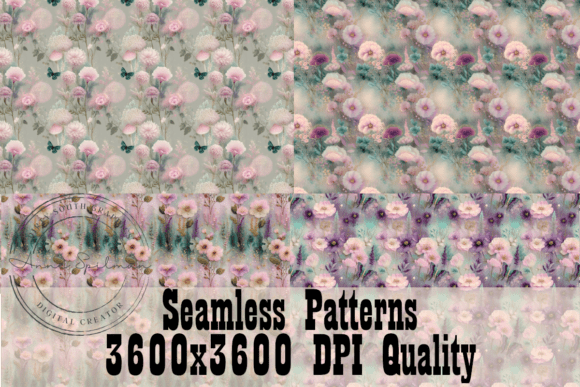
The Dreamy Floral Seamless Patterns product set includes four distinct variations of this format. Each pattern features soft, ethereal floral motifs arranged in a configuration that allows for endless repetition. The "dreamy" aesthetic suggests a focus on pastel tones, soft gradients, and organic shapes, which are particularly effective in contexts requiring a gentle, romantic, or sophisticated tone. Understanding this structure is the first step in integrating these assets into your projects effectively.
Technical Specifications and Workflow Implications
The technical details of an asset dictate how it can be used. The Dreamy Floral Seamless Patterns are provided in .PNG format at 300 dpi (dots per inch) with dimensions of 3600×3600 pixels, resulting in a physical size of 12″ x 12″ at print resolution. These specifications are crucial for several reasons:
- Print Readiness: At 300 dpi, these files meet the industry standard for high-quality printing. This means you can use them directly for scrapbooking pages, fabric swatches, wrapping paper designs, or textile mockups without needing to upscale the image, which would result in pixelation or blurriness.
- Resolution vs. File Size: While 3600×3600 pixels is a substantial file size, it ensures that the detail remains crisp even when scaled up for large-format prints like banners or wall murals. However, for web use, these files may need to be compressed or resized to optimize loading times.
- Raster Nature: It is important to note that these are not vector files (SVG) or editable Illustrator documents. They are static raster images. This limits their editability—you cannot easily change individual flower colors or rearrange elements after download. Therefore, selection must happen before purchase based on the final desired aesthetic.
Integration into Design Processes
The value of Dreamy Floral Seamless Patterns lies in their ability to accelerate the execution phase of various projects. Below are common workflows where these assets provide significant efficiency gains.
Scrapbooking and Paper Crafts
For hobbyists and professional papercrafters, time spent cutting, pasting, and arranging individual elements can be prohibitive. Using pre-made seamless patterns allows for rapid background creation. You can import the 12″ x 12″ PNG files directly into design software like Adobe Photoshop, Canva, or Cricut Design Space. Once placed, the pattern fills the canvas instantly. This is particularly useful for creating consistent themes across multiple project pages. If you are designing a series of wedding invitations or baby shower cards, applying one of the four floral patterns provides immediate thematic cohesion.
Textile and Fabric Design
In the realm of fashion and home decor, creating custom fabric prints traditionally requires complex vector work to ensure clean lines and scalable graphics. However, for photographers and digital artists who work primarily in raster formats, seamless patterns offer a viable alternative. Because the files are 300 dpi and tileable, they are ready for print-on-demand services that specialize in fabric. You can upload the pattern, select a fabric type (such as cotton or linen), and generate a mockup. The seamless nature ensures that when the fabric is cut and sewn, the pattern continues naturally across seams, avoiding awkward visual interruptions.
Web Design and Digital Marketing
While the primary specification is print-oriented, these patterns can enhance digital content. Bloggers and marketers often struggle with finding unique backgrounds that do not look generic. A dreamy floral pattern can serve as a subtle backdrop for blog headers, email newsletter footers, or social media story templates. In this context, the 300 dpi resolution is overkill for screen display, so the practical workflow involves resizing the image to a smaller dimension (e.g., 1920×1080 pixels) while maintaining aspect ratio. This reduces page load times while preserving the visual quality. The tileable feature allows you to create full-width headers by repeating the image horizontally, ensuring the design spans any screen width seamlessly.
Procurement and Platform Compatibility
The acquisition of digital assets has evolved, with platforms like Creative Fabrica offering instant downloads that integrate smoothly into modern creator economies. When purchasing Dreamy Floral Seamless Patterns through such platforms, users benefit from streamlined licensing and immediate access.
Instant Download Workflow
The "instant download" model eliminates the latency associated with traditional stock photography agencies, where approval processes or manual delivery can delay projects. Upon completion of the transaction via Creative Fabrica, the .PNG files are available for immediate extraction. This supports agile workflows where deadlines are tight. For entrepreneurs running Etsy shops or online stores, this speed allows for same-day product listing updates, keeping inventory fresh and responsive to trends.
Licensing and Usage Rights
Before integrating these patterns into commercial products, it is essential to review the license agreement provided by the platform. Most creative marketplaces distinguish between personal use and commercial use. If you are using the patterns for internal presentations or personal scrapbooks, the restrictions are minimal. However, if you plan to sell products featuring these patterns—such as printed tote bags, framed art, or digital planners—you must ensure the license permits commercial distribution. Some licenses allow unlimited end-products, while others may require attribution or limit the number of physical copies. Clear understanding of these terms prevents legal issues and protects your brand reputation.
Best Practices for Implementation
To maximize the utility of Dreamy Floral Seamless Patterns, consider the following practical tips for organization and quality control.
- File Organization: Create a dedicated folder structure for your assets. Label the files clearly (e.g., "Floral_Pattern_1.png", "Floral_Pattern_2.png") rather than relying on default names. This saves time when searching through libraries during busy design sessions.
- Previewing Tiles: Before committing to a final design, test the tiling behavior. In most image editing software, you can duplicate the layer and offset it to check for edge alignment. Although the product description guarantees tileability, verifying this in your specific software environment ensures no unexpected artifacts appear due to rendering differences.
- Layering and Blending: Since these are raster images, they lack the transparency layers of vectors. To integrate them softly into a design, adjust the opacity or blending modes (such as "Multiply" or "Overlay") in your design software. This technique helps the floral pattern interact more naturally with underlying text or other graphical elements, preventing the design from looking flat or overwhelming.
- Consistency Checks: When using multiple patterns in a single project (e.g., mixing different floral sets for different sections), ensure color harmony. The "dreamy" aesthetic usually implies a cohesive palette, but mixing warm and cool florals can create visual dissonance. Stick to one or two complementary patterns per project to maintain professionalism.
Long-Term Value and Scalability
Digital assets like Dreamy Floral Seamless Patterns offer long-term value beyond a single project. Once downloaded and organized, they become part of your reusable resource library. This accumulation of assets reduces future decision fatigue. Instead of searching for new patterns every time a new project arises, you have a curated selection ready to deploy. This shift from reactive searching to proactive utilization is a hallmark of efficient creative management.
Furthermore, as design trends evolve, these timeless floral motifs remain versatile. Unlike highly stylized or trendy graphics that may feel dated quickly, classic floral patterns tend to have a longer shelf life. This makes them a safe investment for businesses looking to build a consistent visual identity over years. Whether used for seasonal marketing campaigns or evergreen product lines, the flexibility of tileable repeats ensures that the asset remains relevant.
Conclusion
Integrating Dreamy Floral Seamless Patterns into your workflow is a strategic move for anyone seeking to balance aesthetic quality with production speed. By understanding the technical specifications—specifically the 300 dpi PNG format and tileable nature—you can confidently apply these assets to diverse mediums, from physical textiles to digital web graphics. The key to success lies in proper preparation, clear understanding of licensing, and thoughtful integration within your broader design system. As you incorporate these resources, you will likely find that the friction between idea and execution diminishes, allowing more energy to be devoted to creativity and strategy rather than technical problem-solving.