African Kente Digital Paper and Patterns: Integrating Cultural Heritage into Modern Creative Workflows
In the landscape of digital design, finding assets that offer both aesthetic impact and cultural depth can be a challenge. Many designers rely on generic textures or stock imagery that lack narrative weight. This is where African Kente Digital Paper and Patterns enters the workflow as a strategic asset. Inspired by the iconic Kente cloth of Ghana, these designs are not merely decorative; they are structured visual languages that bring history, symbolism, and vibrancy to contemporary projects. For professionals ranging from graphic designers and educators to small business owners and hobbyists, integrating these patterns requires an understanding of their technical specifications and cultural context.
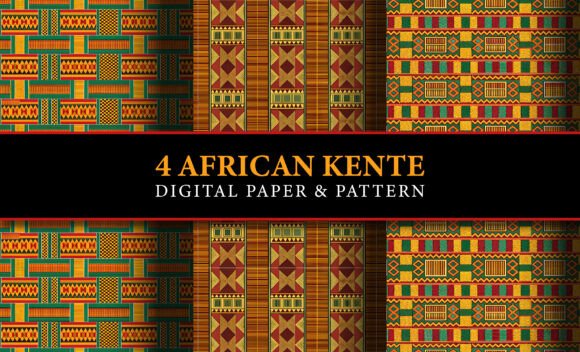
The collection described here offers four distinct high-resolution JPG files, each featuring seamless tiling capabilities. These patterns utilize bold geometric shapes, intricate symmetry, and a specific color palette of red, gold, green, and black. Each hue carries traditional significance: red often symbolizes sacrifice and spiritual energy, gold represents wealth and royalty, green signifies growth and renewal, and black reflects maturity and ancestral connection. Understanding this semantic layer allows creators to use these assets with intention rather than just decoration.
Technical Specifications and Workflow Integration
Before diving into creative application, it is essential to address the technical foundation of these digital papers. The inclusion of 300 DPI (dots per inch) resolution is a critical factor for any project involving physical output. In professional printing workflows, lower-resolution images result in pixelation and blurry edges, particularly when scaling up large formats like banners or apparel prints. By starting with high-resolution assets, you eliminate the need for upscaling software, which often degrades image quality. This ensures that the sharpness of the geometric lines remains intact, preserving the integrity of the Kente design.
The format provided—JPG—is widely compatible across almost all design platforms, from Adobe Photoshop and Illustrator to Canva and Affinity Designer. However, users should be aware that JPG is a lossy compression format. While suitable for most web and print applications, if you plan to manipulate colors extensively or apply complex blending modes, working with TIFF or PNG versions (if available in future updates) might offer better flexibility. For the current JPG set, ensure your workspace is set to CMYK color mode if you are preparing files for professional offset printing, as RGB colors (used on screens) can appear duller in print. Converting these vibrant reds and golds to CMYK early in the process helps predict final output accuracy.
Application in Design and Branding
The versatility of seamless Kente patterns makes them applicable across various stages of the design process. For brand identity specialists, these patterns can serve as foundational elements for logos, packaging, or marketing collateral. When used correctly, they communicate values of heritage, strength, and community. For example, a small business owner launching a product line rooted in African culture can use these digital papers as background textures for product labels. The seamless nature of the pattern allows it to wrap around cylindrical objects or tile across flat surfaces without visible breaks, creating a cohesive and professional look.
In the realm of event planning and stationery, these patterns elevate invitations, save-the-dates, and wedding programs. The bold geometry draws the eye immediately, making it ideal for headers or footers. Designers often struggle with balancing text legibility against busy backgrounds. A practical tip here is to overlay a semi-transparent solid color box or apply a subtle drop shadow behind text elements when placing typography over the Kente patterns. This maintains readability while allowing the rich colors of the pattern to shine through. The combination of red, gold, green, and black provides a strong contrast base, but careful spacing is still required to avoid visual clutter.
Scrapbooking and Personal Projects
For hobbyists and scrapbookers, African Kente Digital Paper and Patterns offers a way to document personal histories or celebrate cultural events with artistic flair. Digital scrapbooking has become a popular method for organizing family archives, and having access to culturally significant backgrounds adds emotional resonance to photo layouts. Unlike physical paper, digital versions allow for infinite replication and experimentation. You can layer multiple patterns, adjust opacity, or cut out specific geometric shapes using masking tools to create unique compositions.
When working on personal projects, consider the thematic consistency of your pages. If you are documenting a trip to West Africa or celebrating Kwanzaa, these patterns provide immediate contextual grounding. They help tell a story before the viewer even reads the journaling entries. Because the files are seamless, you can create custom-sized backgrounds that fit standard scrapbook dimensions (such as 12x12 inches) without worrying about edge alignment issues. This saves time during the layout phase, allowing more focus on photo selection and narrative flow.
Educational and Corporate Use Cases
Educators and corporate trainers can leverage these digital papers to create engaging learning materials. Presentations, worksheets, and certificates benefit from visually stimulating backgrounds that break the monotony of plain white slides. Using Kente patterns in educational handouts can spark conversations about African history, art, and symbolism. It transforms a standard document into a cultural artifact. For instance, a teacher creating a lesson plan on global textiles can use these patterns as primary visual aids, discussing the meaning behind the colors and weaving techniques.
In corporate settings, diversity and inclusion initiatives often require visual assets that reflect a wide range of cultures. Incorporating authentic African designs into internal communications, newsletters, or diversity training modules demonstrates a commitment to inclusivity. However, authenticity matters. Using high-quality, respectful representations of Kente cloth, as opposed to generic "tribal" prints, shows attention to detail and cultural respect. The specific mention of Ghanaian inspiration in the product description adds a layer of authenticity that resonates with informed audiences.
Best Practices for Implementation
To get the most out of this collection, follow a few practical guidelines for organization and execution. First, create a dedicated folder structure for your digital assets. Label the files clearly, such as "Kente_Red_Gold_300DPI," to make retrieval easy during fast-paced projects. Second, always keep a master copy of the original 300 DPI files untouched. Create duplicates for editing to prevent accidental degradation of the source material. Third, test your patterns at different scales. What looks good at 50% zoom in your design software might reveal repeating artifacts or lack impact when printed at full size. Print a small test strip to check color fidelity and pattern continuity before committing to a large production run.
Finally, consider the psychological impact of color psychology in your designs. The red and gold tones evoke warmth and energy, making them excellent for calls-to-action or celebratory themes. Green and black provide stability and contrast, useful for grounding designs. By consciously selecting which pattern variant to use based on the emotional tone you wish to convey, you move beyond simple decoration to strategic visual communication. Whether you are crafting digital art, designing apparel, or producing printed materials, these seamless Kente patterns offer a timeless solution that honors tradition while meeting modern technical demands.